
Blogs
Leaving Home Forever: The Silent Tragedy of Poland’s 1968 Exodus

History has a way of silencing pain, not by erasing it, but by letting it fade beneath layers of political rhetoric and collective forgetfulness. Yet some wounds refuse to disappear.
In 1968, as Poland reshaped its image under a cloud of political manipulation, thousands of Jewish families were told they no longer belonged. Their only crime was existing between the borders of identity and ideology.
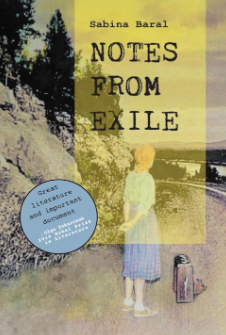
Sabina Baral’s Notes from Exile captures that moment, when citizenship was revoked not by law alone, but by cruelty disguised as patriotism. This book represents the story of every family who packed their lives into boxes, every mother who left her birthplace knowing she would never return, every child who learned too soon that home can be taken away.
The Exodus That Wasn’t a Choice
In the late 1960s, the Polish government launched an “anti-Zionist” campaign that quickly turned into open antisemitism. Thousands of Polish Jews — doctors, teachers, engineers, students were stripped of citizenship and a sense of belonging. For them, exile wasn’t a decision; it was a sentence.
Baral describes the heartbreak of departure through piercing simplicity. At customs, they went through a humiliating procedure that lasted several days. A pair of scuffed shoes, a few coins, and a broken heart were all they were allowed to take. Behind them, homes were emptied, friendships severed, and a nation’s conscience abandoned.
In those departures lay a deliberate attempt to unwrite a people from the story of their own country.
Memory as Resistance
Notes from Exile feels like touching the fragile surface of remembrance.
Baral doesn’t dramatize her loss; she documents it with restraint, honesty, and an almost forensic precision. She remembers the train named Chopin, ironically carrying away former citizens who had fought for Poland and built its culture and image in the world. She remembers the small indignities: the bribes, the confiscated heirlooms, the impossible bureaucracy.
But beyond the details lies something greater, the quiet rebellion of memory. Baral transforms recollection into defiance. Every page insists, we were here. Every story says, you cannot erase us.
The Weight of Exile
Exile is more than displacement. It is a slow unraveling of identity. For Baral, resettlement in Vienna, Rome, and finally America came with both relief and loss. They were safe, yet stateless; free, yet haunted.
In one of the most touching passages, Baral confesses that she still hopes for a letter from Poland, one that would simply say, “It was a mistake.”
Not for restitution, not for return, but for the restoration of dignity. It shows that even though San Francisco is her home now, she still hasn’t gotten over the injustice of being exiled from her birthplace.
Why This Story Matters Now
The tragedy of 1968 is not confined to Poland. It is a mirror reflecting the fragility of belonging everywhere. Whenever nations define identity through exclusion, the story repeats itself; only the names change.
Today, as refugees across the world are again forced to flee persecution and prejudice, Notes from Exile stands as both a warning and a prayer. It tells us that home is not merely a place — it is dignity, memory, and the right to belong without apology.
Grab your copy now.